

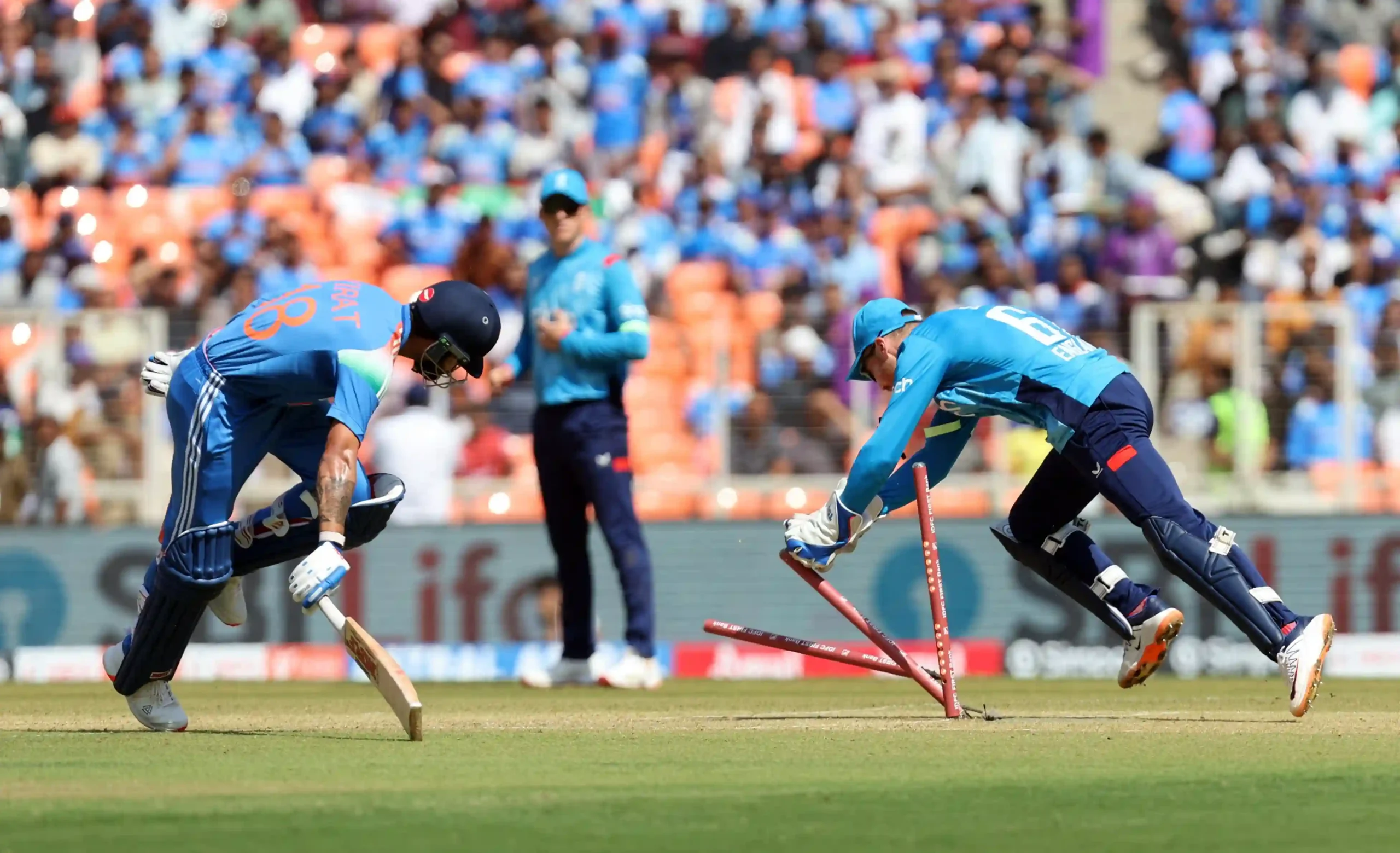
The ICC has made a change to the run-out and stumping rules. Starting October 1, 2026, a fielder must have complete control of the ball when the stumps are broken. Just touching the ball with the hand or glove while dislodging the bails is no longer enough.
Under the old rule, a dismissal could stand if the ball hit the stumps, even if the fielder did not have full control. Now the rule is stricter. If a fielder deflects or tips the ball onto the stumps without controlling it, the batter will not be given out. The fielder must have full control before and while breaking the wicket.
The ICC and MCC introduced this clarification to help umpires make more consistent decisions. Run-out and stumping calls are often reviewed by the third umpire, and marginal decisions can be difficult. The new rule removes some of that ambiguity. It ensures that only clear cases of controlled dismissals are given out.
The change applies to all international series that begin on or after October 1, 2026. Series already in progress will continue under the old regulations. The update also aligns the ICC Playing Conditions with the latest MCC Laws of Cricket, which came into effect on the same day.
ICC Updates Playing Conditions Across Formats
The ICC has announced several changes to its playing conditions. The new rules apply to all international series starting on or after October 1, 2026. Ongoing series will continue under the old regulations. The update also brings the ICC conditions in line with the latest MCC Laws of Cricket.
Sourav Ganguly, who chairs the ICC Men’s Cricket Committee, said the changes were carefully reviewed. He said the goal is to keep the rules relevant to the modern game while protecting its integrity.
Time-Wasting by Batters
The rules for batters who waste time have been tightened. If a batter is not ready within the allowed time, the first offence brings a warning. A second offence brings a final warning. From the third offence onward, the fielding side is awarded five penalty runs. Repeated offences could also lead to action under the Code of Conduct.
Cricket Ball Specifications
The ICC has set separate size and weight limits for men’s, women’s, and junior cricket balls. In the past, manufacturers often used one ball for both women’s and junior cricket. The new rules create three clear categories. This gives each level of the game its own proper specifications.
Overthrows and Misfields
The definition of an overthrow is now clearer. An overthrow is a deliberate attempt to throw the ball at the stumps to stop runs or effect a run-out. A misfield is different. If a fielder simply fails to stop the ball or mishandles a throw, that is not an overthrow.
When Is the Ball Settled?
Umpires now have more freedom to decide when a ball is finally settled. This matters most on the last ball of a close match. The ball no longer has to be in the bowler’s or wicketkeeper’s hands to be considered settled.
Complete Control for Run-Outs and Stumpings
A fielder must have full control of the ball to claim a run-out or stumping. Just touching the ball with the hand while it breaks the stumps is not enough.
Pink Balls in Daytime Tests
As a trial, pink balls may be used in daytime Test matches. Both teams must agree before the match starts. The aim is to reduce lost play because of bad light. Once the match begins, the decision cannot be changed. Teams cannot switch from a red ball to a pink ball mid-match.
End of Play on the Final Wicket
Play will no longer automatically end if a wicket falls in the last over of the day. If the over is not complete and conditions are still fit, the remaining balls must be bowled. This change is meant to avoid wasting time and to keep the drama alive. The remaining deliveries would otherwise have to be bowled the next day anyway.
T20I Innings Break
T20Is now have a fixed 15-minute innings interval. If time is lost during the match, the break can be reduced to as little as 10 minutes.
Coaches at Drinks Breaks
In ODIs and T20Is, the head coach or a designated staff member may now enter the field during drinks breaks. This brings the two formats in line with each other.
New Wide Ball Rule Made Permanent
The new wide ball rule, which was trialled in ODIs and T20Is, is now permanent. The rule gives bowlers some leeway if the batter is moving around before or during delivery. The position of the batter’s legs at the moment of delivery is used as the reference point. This applies even if the batter then moves across to the off side.
FAQs
Q. When will the new ICC playing conditions take effect?
A. They apply to series starting on or after October 1, 2026.
Q. What happens after repeated batter time-wasting offences?
A. The fielding side gets five penalty runs from the third offence.
Q. What is required for a run-out or stumping?
A. The fielder must have complete control of the ball.
Q. How long is the T20I innings break?
A. The break is fixed at 15 minutes and can be reduced to 10 minutes.
Q. What is the new rule for daytime Test matches?
A. Teams can agree to use a pink ball to reduce lost play from bad light.
Get the Latest Cricket Updates at IceCric.News. Also, Follow Our Social Media for live updates on Facebook and Instagram.
