

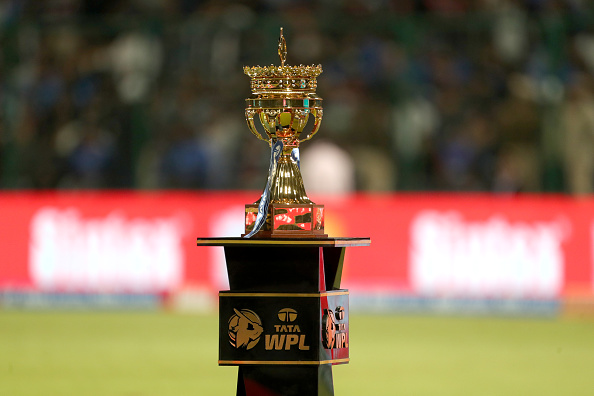
Women’s cricket in India existed long before the WPL (Women’s Premier League) arrived in 2023. The players like Mithali Raj and Jhulan Goswami had built careers that deserved far more attention than they received, and the 2017 World Cup final run had briefly made the country pay attention. But the infrastructure around the game remained thin, the domestic pathways were underfunded, and the gap between playing for India and having a sustainable professional life as a cricketer was wide enough to discourage many talented young athletes from committing fully to the sport.
The WPL changed that calculation almost immediately.
What the WPL Actually Is
The Women’s Premier League is a franchise-based T20 competition modelled directly on the Indian Premier League. The Board of Control for Cricket in India launched it in 2023, awarding five franchises to major corporate groups at auction. The franchise fees alone, totalling over 4,669 crore rupees across five teams, signalled something that women’s cricket in India had never truly experienced before.
The inaugural season was held in Mumbai and Delhi and drew television audiences that surprised even the most optimistic projections. The final between Mumbai Indians and Delhi Capitals attracted millions of viewers, a number that validated the concept and immediately created pressure on broadcasters and sponsors to treat the league as a genuine property rather than a promotional afterthought.
The Money Changes Everything
The most immediate and tangible impact of the WPL was the prize pool and player salaries. In the 2023 auction, Smriti Mandhana became the most expensive player sold, picked up by Royal Challengers Bangalore for 3.4 crore rupees. For context, that figure was not just historically significant for women’s cricket in India.
For players outside the Indian national team setup, the Women’s Premier League created a category of earning that had simply not existed before. Domestic cricketers who had been balancing the sport with careers in government jobs or teaching could suddenly make decisions purely based on cricket. That shift in practical reality is difficult to overstate.
International players also benefited from the Women’s Premier League’s arrival. Australian, English and South African cricketers brought their own knowledge and playing styles into Indian dressing rooms, accelerating the development of younger Indian players in ways that no domestic competition alone could have managed.
Visibility and the Television Effect
Before the Women’s Premier League, women’s cricket in India lived primarily on social media highlights and occasional national broadcaster coverage during ICC events. The WPL put women’s cricket on prime time television for weeks at a stretch, with full commentary teams, pre-match analysis and the kind of production quality that audiences associate with the IPL.
That visibility created a feedback loop. Girls watching the WPL saw professional women’s cricketers treated as genuine stars. Academies reported increased interest from young female athletes after the first season. Sponsors who had never considered women’s cricket as a marketing platform began approaching players directly for endorsement deals. Smriti Mandhana, Deepti Sharma and Richa Ghosh moved from being recognisable faces within cricket circles to becoming mainstream commercial personalities.
Developing the Next Generation
The Women’s Premier League also forced the BCCI to strengthen the domestic pipeline feeding into it. A stronger Under-19 structure and more competitive state-level competitions became necessary to supply the franchises with enough quality Indian players to fill their rosters. That infrastructure investment has benefits that extend far beyond the league itself, reaching players in smaller towns and states who previously had limited pathways to national recognition.
The Under-19 Women’s T20 World Cup success in 2023, which India won, was not directly caused by the Women’s Premier League but arrived at a moment when the entire ecosystem around women’s cricket in the country was being rebuilt. The timing was not coincidental.
What Still Needs to Change
The WPL has created genuine momentum but the work is not finished. The coverage of women’s domestic cricket outside the Women’s Premier League window still lags significantly. The competition currently features only five teams, limiting the number of professional contracts available.
But the direction of travel is clear. Women’s cricket in India before 2023 and after 2023 are genuinely different stories, and the WPL is the reason why.
FAQs
Q. When was the Women’s Premier League launched?
A. The BCCI launched the Women’s Premier League in 2023.
Q. How much did Smriti Mandhana earn in the first Women’s Premier League auction?
A. Royal Challengers Bangalore bought Smriti Mandhana for ₹3.4 crore in 2023.
Q. How has the Women’s Premier League helped Indian women cricketers financially?
A. The WPL created new earning opportunities through player salaries, franchise contracts, and endorsements.
Q. How has the Women’s Premier League increased the visibility of women’s cricket in India?
A. It brought women’s cricket to television with regular matches and professional coverage.
Get the Latest Cricket Updates at IceCric.News. Also, Follow Our Social Media for live updates on Facebook and Instagram.
