

Bad free-agent deals are easy to spot in hindsight, but the biggest NBA free agency blunders raise red flags on signing day. This ranking weighs the money, the length of the deal, how quickly the contract fell apart and how much damage it did to the team.
Teams overpay injured players, as with Parsons, Ball and Hayward. They give long contracts to players in their late 20s, as with Johnson. And they react to sudden changes in the salary cap, as in the summer of 2016.
The worst contracts are not always signed by bad teams. Several of these came from franchises that were competing for the playoffs, and the pressure to make a splash led to overpayment. The lesson of the last 20 years is that the length and structure of a deal matter as much as its size.
Here are ten of the biggest NBA free agency blunders of the 21st century.
10 Biggest NBA Free Agency Blunders of the 21st Century
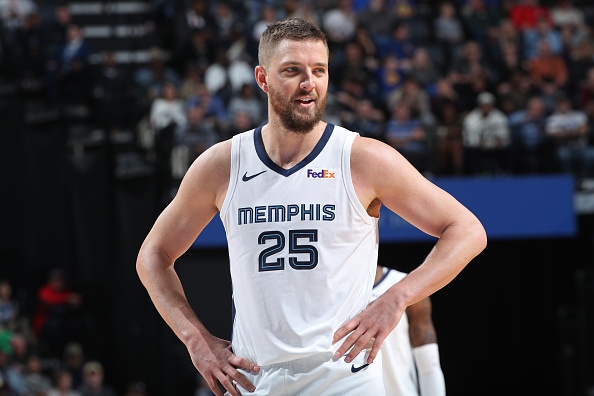
1. Chandler Parsons, Memphis Grizzlies (2016)
Parsons signed a four-year, $94.5 million contract after a season in Dallas that had ended early because of knee injuries. He had never been an All-Star, and his injury history was already well known. In three seasons with Memphis, he played only 95 games, averaging 7.8 points. The Grizzlies finished in the basement of the West and later dumped his salary on the Hawks, who waived him in 2020. Many rankings call it the worst contract in NBA history.
2. Bradley Beal, Washington Wizards (2022)
Beal re-signed for five years and a reported $251 million, including a no-trade clause, while the Wizards needed a rebuild. The clause gave him control over his own exit, which made the contract nearly impossible to move. Washington eventually sent him to Phoenix in 2023, but the Suns could not trade him either and bought him out in July 2025. The deal still carried a $57.1 million player option for 2026-27, leaving a huge financial burden behind.
3. Timofey Mozgov and Luol Deng, Los Angeles Lakers (2016)
The Lakers signed both players in the same summer for a combined $136 million. Mozgov got four years and $64 million despite barely playing in the 2016 Finals, and Deng got four years and $72 million at age 31, after averaging 12.3 points in Miami. Deng played 79 games for the Lakers and was waived in 2018, and the team had to give up D’Angelo Russell and a draft pick to dump Mozgov’s deal.
4. Gordon Hayward, Charlotte Hornets (2020)
The Hornets gave Hayward four years and $120 million, even though he had a long history of injuries. He produced when healthy, but he missed a large share of games, and the team never gained the competitive boost it expected. He was eventually moved to Oklahoma City. The contract was the largest in Hornets history at the time.
5. Lonzo Ball, Chicago Bulls (2021)
Ball arrived on a four-year, $85 million sign-and-trade and looked like the perfect fit for the Bulls’ backcourt. He played well early but had multiple knee procedures and missed the rest of 2021-22, all of 2022-23 and all of 2023-24. The Bulls had given up significant assets and cap flexibility for a player who was not available.
6. Rashard Lewis, Orlando Magic (2007)
Lewis signed a six-year, $118 million deal after averaging 16.3 points in Seattle. He is the only player on the Bleacher Report list to make an All-Star team after signing his contract, and he helped Orlando reach the 2009 Finals. But the length and price were far above market value, and in December 2010 the Magic traded him to Washington for Gilbert Arenas, a player with an even worse contract.
7. Joe Johnson, Atlanta Hawks (2010)
Johnson signed a six-year deal worth about $123.7 million at age 29. The annual salary was defensible for a star, but the length was the mistake. The Hawks made the playoffs regularly with him, but never advanced far, and he became a symbol of how long-term contracts can lock a team into mediocrity.
8. Tobias Harris, Philadelphia 76ers (2019)
Harris signed for five years and $180 million, even though he was a good but not elite forward. The deal ate up cap space that the 76ers could have used elsewhere, and it limited their flexibility as Joel Embiid’s prime developed. He was a productive player but never worth the money.
9. The 2016 Class: Joakim Noah, Bismack Biyombo and Evan Turner
The cap jumped from about $70 million to $94 million in 2016, and teams spent as if the money was free. Noah got four years and $72 million from the Knicks, Biyombo got four years and $72 million from the Magic, and Turner got four years and $70 million from the Trail Blazers. None of them lived up to the money, and each deal became a financial burden within a year or two.
10. Gilbert Arenas, Washington Wizards (2008)
Arenas re-signed for six years and a reported $111 million after missing most of two seasons with knee injuries. He played only a handful of games in the first years of the deal, and in December 2009, he was suspended after a locker-room gun incident. The Wizards eventually traded him to Orlando in a swap for Lewis.
FAQs
Q. How much did Chandler Parsons receive from the Memphis Grizzlies?
A. Parsons signed a four-year contract worth $94.5 million in 2016.
Q. Which team gave Bradley Beal a five-year, $251 million contract?
A. The Washington Wizards re-signed Beal in 2022.
Q. How much did the Lakers spend on Timofey Mozgov and Luol Deng?
A. The Lakers gave them contracts worth a combined $136 million in 2016.
Q. Which team signed Tobias Harris to a five-year, $180 million deal?
A. The Philadelphia 76ers signed Harris in 2019.
Get the Latest Cricket Updates at IceCric.News. Also, Follow Our Social Media for live updates on Facebook and Instagram.
